
For many working parents, the six-and-a-half-week summer break poses an organizational challenge every year. That’s because their own vacation time isn’t enough to cover the entire period when their children are out of school. This calls for solutions—within the family, through summer programs, and, increasingly, from employers as well.
For children, vacation means, above all, free time. For their parents, planning often begins weeks in advance: Who will take care of the kids on which days? Can the grandparents step in? What vacation activities are available? And how can the remaining weeks be balanced with the demands of work?
It usually takes several steps to get through the summer break. The break coincides with a daily routine in which balancing work and family life is already challenging for many parents. The latest North Rhine-Westphalia Family Report clearly illustrates this: One in five working mothers with a child in elementary school reports significant conflicts between work and family demands.
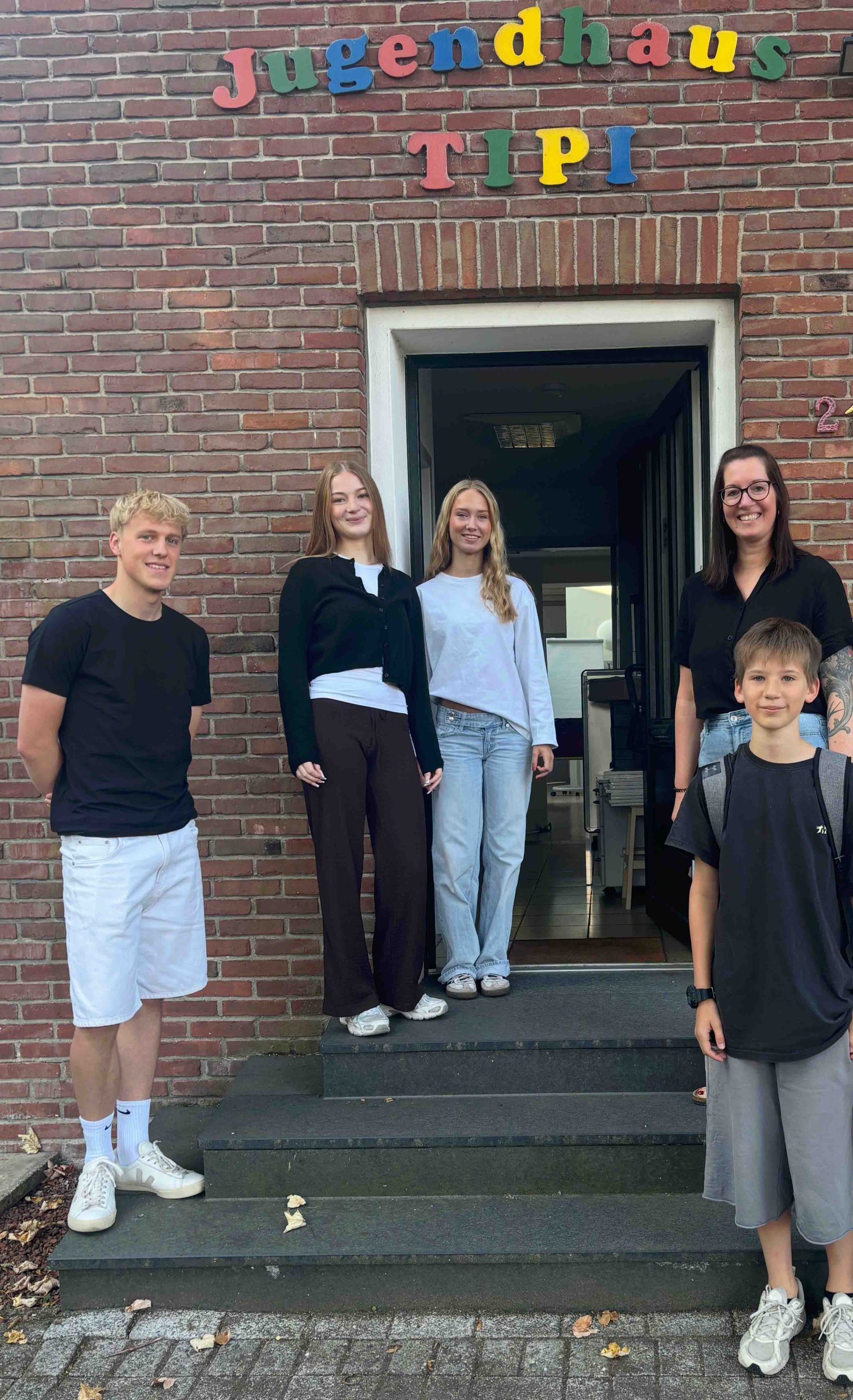
Kathrin Harlacher knows this challenge from personal experience. The 42-year-old food scientist has been working in quality management at BEWITAL agri for three years now and also handles energy management tasks for the corporate group. When her son Fyn was still attending preschool in Borken, the daycare’s closing times were relatively easy to accommodate even with her old job in Düsseldorf. “Once he started school, organizing things became more challenging,” says Kathrin Harlacher:
“For many families, school breaks are just the tip of the iceberg. Especially when children start elementary school, balancing family and work becomes a constant organizational challenge for many parents. Childcare hours, canceled classes, and long school breaks all have to be coordinated with the demands of everyday work life.” Having her family live nearby has always been a big advantage for Harlacher. Whenever something came up, someone was usually able to step in. “Without family to fall back on, it would have been much harder,” she says. “Still, every year you have to figure out how to organize the school breaks. And you also wonder: how do families who don’t have local support manage to do this at all?”
This is precisely where Kathrin Harlacher believes politics and society have a responsibility: “While companies are rightly expected to create favorable conditions for working parents and to enable women to advance to specialized and leadership positions, there is also a need for reliable, high-quality childcare structures and fundamental cooperation among policymakers, society, and employers.”
Companies can provide relief, but not comprehensive solutions
“We know that every year during school breaks, many families have to figure out anew how to organize childcare, and that the available options aren’t always satisfactory,” says Yvonne Brüninghoff, Head of Human Resources at the BEWITAL Group. “As an employer, we can’t solve all these challenges on our own. But we want to provide support where we can, and by offering school break childcare, at least take some of the pressure off families’ daily lives.”
That’s why the BEWITAL Group organized its own two-week summer vacation program for its employees’ children again this year. When Harlacher learned about this opportunity shortly after joining BEWITAL, she was thrilled. “I actually wrote to my family right away,” she says. “For us, it was a real relief and, at the same time, a nice addition for Fyn to what we do privately during the summer break.” The company also explicitly views this program as a building block rather than a complete solution.
Two weeks that bring relief
This is Fyn’s third time participating in the vacation program. At eleven years old, he’s now quite happy to spend a few hours at home by himself from time to time. Still, both of them appreciate the vacation program. “It’s just a good feeling to know that he’s not alone all day. When Fyn tells us what they’ve been up to, you can tell right away: he certainly wasn’t bored,” says Harlacher.
The program ran for two weeks, from 8 a.m. to 2:15 p.m. each day, and sometimes longer on certain field trip days. The schedule included group breakfasts, arts-and-crafts and sports activities, as well as various field trips. Among other places, the children visited the Forschermühle in Stadtlohn and the Frankenhof. They also got to know their parents’ workplaces. For Kathrin Harlacher, however, the value of the program lies not solely in its activities.
“I really appreciate that my employer is specifically filling a gap by providing vacation care. I can focus on my work while knowing that Fyn is well taken care of and having a great time.”
For her, the program has another nice benefit. That’s because the after-school care program brings together not only the children but also the families of the staff members: the children get to know each other, parents meet when dropping off and picking up their children, and by the time the next family celebration rolls around, there are already many familiar faces. Kathrin Harlacher feels that this fits well with the family-like atmosphere she also experiences at work.


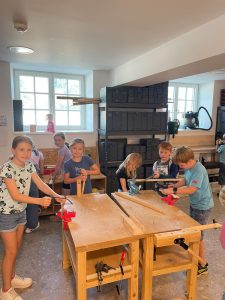
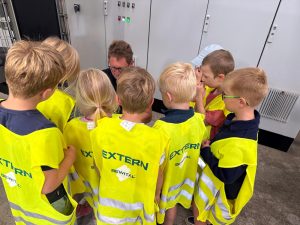
Visits, for example, to the local police station or the Frankenhof Zoo, are just as much a part of the BEWITAL vacation camps as a tour of the BEWITAL Group. This allows the children to learn firsthand about their parents’ work and immerse themselves in the world of BEWITAL for a day during their vacation.